
Are you looking to promote your business locally without spending money on tactics that stopped working a few years ago? You are not alone. We hear this from electricians, plumbers, HVAC contractors, roofers, and remodelers every week — especially owners who built their company on referrals and now need a steady pipeline beyond word of mouth.
The good news is you do not need a massive ad budget to get started. Many of the best ways to promote your business locally for free still begin with Google Business Profile, reviews, and showing up where homeowners in your area already look. The difference in 2026 is that Google expects more — fresher photos, accurate info, real replies, and content that answers questions before a homeowner picks up the phone.
With so many channels to choose from, it can be hard to know where to start. This guide walks through what changed in 2026, the free and low-cost tactics that still work for contractors, and a simple 30-day plan you can follow before hiring an agency. For deeper local SEO strategy, see our local SEO tips and SEO services hub.
Keep in mind: local promotion in 2026 is not just a free Google listing and a Facebook page. Google rewards profiles that stay active, authentic, and easy for homeowners to trust.
Why Local Promotion Matters More in 2026
When it comes to hiring a contractor, homeowners still choose someone they trust in their own city or county. What changed is where that trust gets built. Google AI Overviews, Maps, ChatGPT, and Reddit threads now shape who makes the shortlist before anyone calls three companies for quotes.
One of the first questions contractors ask us in 2026: do I still need a website? The honest answer for most trades is yes — eventually. You can survive on referrals and a Google listing alone for a while, but you cap growth when homeowners cannot verify you online. A complete Google Business Profile plus a simple website, or strong service pages, makes you findable when referrals run dry.
Local promotion also compounds over time. Every review, photo, and blog post you add makes the next lead a little cheaper. That is the opposite of shared lead platforms, where costs tend to rise every year. If you are comparing channels, our breakdown of the real cost of contractor leads shows why owned local marketing usually wins long term.
Key takeaway: Promoting locally is not one tactic — it is building trust where homeowners search, scroll, and ask neighbors for recommendations.
Google Business Profile in 2026: What Changed
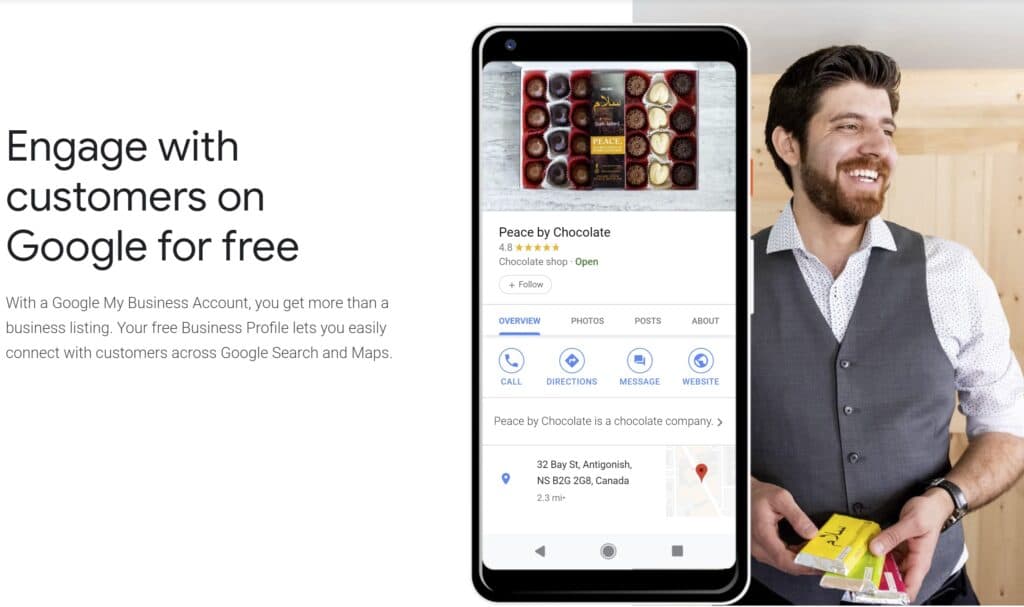
Google Business Profile — formerly Google My Business — is still the foundation of local promotion. It is free, it powers Maps, and it feeds AI-generated answers. But the rules shifted in 2026, and profiles that have not been touched in months are losing ground to competitors who treat GBP like an active channel, not a one-time signup.
GBP updates contractors should know
- Q&A is gone. Google removed the Q&A feature in late 2025. Put answers in your business description, services list, website FAQs, and review replies instead.
- Freshness matters. Local SEO reports in 2026 link visibility drops to profiles that go 30+ days without new photos, posts, or updates. Weekly activity is better in competitive markets.
- Real photos win. Google’s guidelines favor well-lit, unaltered images of your actual team, jobs, and workspace — not stock photos or obvious AI-generated scenes.
- Google may call your business for customers. AI-powered calling in Search can contact you on a homeowner’s behalf to ask about pricing, availability, or hours. Make sure your phone number, hours, and services stay accurate.
- AI review reply drafts are rolling out inside GBP. Use them to respond faster — but edit every reply so it sounds like your company, not a robot.
How to set up and optimize your profile
One of the first things you should do is claim your profile at business.google.com. Choose your primary category carefully — it carries more weight than loading up secondary categories that do not match your core work. Add service areas if you visit customers at home and prefer not to show a residential address publicly.
Complete every section Google recommends: hours (including holidays), services with descriptions, appointment links, and at least 10–15 real photos. Post a short update at least monthly — a finished job photo, a seasonal reminder, or a new service. Ask every satisfied customer for a Google review within 24 hours of job completion. You can rest assured that steady review growth makes a real difference in how often you show up in Maps.
Key takeaway: Treat Google Business Profile like a living profile, not a digital business card you set once and forget.
How to Promote Your Business Locally for Free
Search interest in how to promote your business locally for free jumped sharply in 2026. Contractors want practical steps that do not require a credit card. There are several channels that still earn trust without a big budget:
- Google Business Profile — maps visibility, reviews, posts, and direct calls
- Review requests — a quick text or email after every completed job; aim for steady monthly growth, not bursts
- Bing Places — often overlooked; a quick duplicate of your GBP data
- Nextdoor and local Facebook groups — answer questions helpfully and follow each group’s rules about self-promotion
- Referral partnerships — complementary trades (roofer + gutter company, plumber + restoration contractor)
- Local networking — chamber events, supplier showrooms, builder meetups
- Project photos on Instagram or Facebook — before-and-after shots with your service area in the caption
- Simple blog posts on your website — FAQs, cost guides, and permit explainers that match how homeowners search
One pattern we see in Reddit threads in 2026: contractors who rely on Instagram or WhatsApp alone, without a website or GBP, often plateau. Homeowners want to verify licenses, read reviews, and see proof of work before inviting someone into their home. Make sure you give them a way to do that.
Key takeaway: Free local promotion works best as a stack — GBP plus reviews plus one or two community channels — not a single tactic on its own.
Local SEO for Contractors and Small Businesses
When it comes to local SEO for small business, contractors benefit from the same fundamentals as any local company. Local SEO means optimizing your online presence so you appear when someone searches “emergency plumber near me” or “roof repair [city name].”
There are several things to consider. You need a verified Google Business Profile, consistent name, address, and phone across directories, service-and-city pages on your website, and content that answers local questions — permits, timelines, typical costs. Internal links between related services help Google understand what you do.
Local SEO takes longer than ads, but it builds an asset you own. Depending on your trade and market, most contractors invest $1,500–$5,000/month with an agency once they are ready to scale beyond free tactics. See how much SEO costs for realistic ranges.
Local SEO also feeds AI search visibility. Google AI Overviews and tools like ChatGPT pull from well-structured local content when recommending contractors — so the work you do today can pay off in places you are not even checking yet.

Key takeaway: If you can only invest in one paid channel after free tactics, local SEO usually delivers the lowest cost per booked job over 12 months or more.
Google Local Services Ads and Paid Local Channels
When free tactics are working but you need more volume, Google Local Services Ads (LSAs) are often the next step. You pay per exclusive lead — a phone call or message — not per click shared with competitors. Depending on your trade and market, typical costs run $25–$75 per lead.
LSAs require license verification, background checks, and a strong review score. They appear at the top of search with a Google Verified badge — the name that replaced Guaranteed in late 2025 — high intent, high trust. For many contractors, that combination makes them worth testing once your GBP is in good shape.
Hyper-local Facebook and Instagram ads can also work when you target a tight radius around your service area. Start small ($10–$20/day), use real job photos, and send traffic to a dedicated landing page with click-to-call — not your homepage.
We recommend avoiding reliance on Angi, HomeAdvisor, or Thumbtack as your primary channel. They can fill slow weeks, but shared leads get expensive fast. Compare the math in our lead cost guide before locking into annual contracts.
Key takeaway: LSAs add speed; local SEO adds long-term depth. Most growing contractors use both once free channels are maxed out.
Social Media and Community Groups That Still Work
Facebook neighborhood groups and trade-specific communities remain one of the fastest ways to promote your business locally on Facebook — if you participate like a neighbor, not a billboard.
Home improvement groups in major metros often allow promotional posts on set days — for example, the 1st and 15th of the month. Between those days, answer questions, share tips, and build name recognition. The contractors who spam daily get muted or removed.
Instagram still works well for visual trades — flooring, painting, landscaping, kitchen remodels. Post before-and-after photos, short Reels of job-site progress, and customer testimonials. Use a mix of service hashtags and local tags without overstuffing.
If you want a more structured approach to social beyond organic posts, our social media marketing services can help point you in the right direction.

Key takeaway: Community groups reward helpful presence. Show up consistently, and the referrals follow — not the other way around.
Reddit, Forums, and Word of Mouth in 2026
Reddit shows up more in Google and AI answers in 2026. Homeowners ask r/HomeImprovement, r/Homeowners, and city subreddits for contractor recommendations. You cannot promote your company directly without getting banned — but you can build a reputation by giving straight answers when plumbing, roofing, or HVAC questions appear.
The same applies to forums like ContractorTalk and local Facebook groups. Contractors who share practical advice — permit timelines, realistic price ranges, what to watch for in quotes — get remembered when someone needs a pro.
Word of mouth still matters most. A simple review request after every job, and a thank-you when someone refers you, keeps the flywheel turning. Make it easy: a direct Google review link in your follow-up text beats a generic “leave us a review” email.
Key takeaway: Organic forum presence is slow-burn trust building. It works best alongside GBP and reviews, not instead of them.
Your 30-Day Local Promotion Plan
If your local marketing has been on autopilot, here is a practical four-week plan most contractors can run without outside help. There are several things to consider each week — but none of it requires a big budget to start.
Week 1: Fix the foundation
- Claim or audit Google Business Profile — hours, phone, services, categories
- Remove stock photos; upload 5–10 real job and team images
- Set up Bing Places and make sure your NAP matches GBP exactly
- Create a simple review request template (text message + email)
Week 2: Get visible
- Post one GBP update (finished project, seasonal tip, or new service)
- Join 2–3 local Facebook or Nextdoor groups; read the rules first
- Publish one blog post or FAQ page answering a common customer question
- Ask your last 10 happy customers for a Google review
Week 3: Expand reach
- Post 3–4 project photos on Instagram or Facebook with local captions
- Identify one complementary trade for a referral swap
- Apply for Google Local Services Ads if eligible for your trade
- Reply to every review received — positive and negative
Week 4: Measure and adjust
- Check GBP Insights: calls, direction requests, website clicks
- Track where leads came from (ask on every inquiry)
- Double down on the channel that produced the best jobs — not just the most leads
- Schedule monthly GBP photo and post reminders so you never hit the 30-day stale zone
Key takeaway: Thirty days of consistent local promotion beats a one-time marketing sprint every time.
Need Help Promoting Your Business Locally?
Free tactics can take you far — especially if you stay consistent with Google Business Profile, reviews, and local content. When you are ready to scale beyond word of mouth, local SEO and Google Ads can fill the pipeline without shared-lead platform fees.
You do not have to figure it out alone.
Our team helps contractors across Canada and the U.S. build local visibility that turns into booked jobs. Get in touch today — we will review your profile and help point you in the right direction.
Frequently Asked Questions
Start with a complete Google Business Profile, then add Bing Places, review requests after every job, and participation in local Facebook or Nextdoor groups. For paid options, consider Google Local Services Ads for exclusive leads or hyper-local Facebook ads. Most contractors combine free GBP work with local SEO once they outgrow referrals alone.
The best free channels in 2026 are Google Business Profile (posts, photos, reviews), referral partnerships with complementary trades, community group participation, project photos on social media, and simple FAQ or cost-guide content on your website. Avoid relying on only one channel — stack three or four for the best results.
No. Google My Business (GMB) was rebranded to Google Business Profile. The platform, verification process, and Maps integration work the same way — but the 2026 feature set includes AI review replies, stricter freshness expectations, and AI-assisted customer calls through Search.
You can get some leads with Google Business Profile and social media alone, but a website (or strong service pages) makes you credible when homeowners compare options. It also gives you a place to publish local content that ranks in search and feeds AI answers — something Instagram alone cannot do.
At minimum, add one new photo or post every 30 days. In competitive markets, weekly updates perform better. Reviews and review replies help, but they are not a substitute for owner-added photos, posts, and accurate business information.
The highest-trust stack for most contractors: referrals and reviews first, then an optimized Google Business Profile, then local SEO on your website, then Google Local Services Ads for immediate volume. Shared lead platforms can supplement slow periods but rarely work as a primary long-term strategy.
Yes. Create a Facebook Business Page, join local and trade-specific groups, and follow each group’s rules about promotional posts. Answer homeowner questions between promo days, share project photos, and link back to your Google reviews or website when relevant.